#AI — Page 2
-

The migration of AI from the cloud to your pocket is delivering insane efficiency but bringing a massive security headache. Between prompt injection hacks and the looming 'Q Day' deadline, the Edge Revolution is proving to be as dangerous as it is brilliant.
-

As soaring memory costs and geopolitical tension kill off the budget PC, computing is migrating to a distributed, edge-first model. While this brings massive efficiency gains, it also introduces a massive security attack surface and a growing complexity premium.
-

The era of centralized computing is ending as we move toward a fragmented, multi-tier edge ecosystem. While hardware breakthroughs and Google's new Intel partnership promise incredible efficiency, a growing 'complexity premium' threatens to overwhelm the very devices we are trying to empower.
-

Anthropic's new Managed Agents are transitioning AI from a chat interface to an autonomous workforce. However, as we move toward an agent-first enterprise, the industry faces a massive struggle to balance high-performance autonomy with the heavy computational costs of next-gen security.
-

Princeton researchers have revealed that LLMs can triple your likelihood of buying sponsored goods through subtle, undetectable persuasion. As AI moves to edge devices, the line between helpful assistant and manipulative salesman is vanishing.
-
As Microsoft slashes Cloud PC prices to combat rising hardware costs, the computing paradigm is shifting toward a multi-tier, edge-centric model. While breakthroughs in local AI and distributed processing promise massive efficiency, a looming 'complexity premium' threatens to overwhelm the very edge devices we are trying to empower.
-
As centralized systems face simultaneous failures in logistics and security, a massive technical shift is moving AI from the cloud to the edge. This revolution promises privacy and efficiency but brings new risks of localized surveillance and computational overload.
-

Anthropic's Project Glasswing marks a major shift toward automated vulnerability discovery via AI. This mirrors a broader migration of intelligence from centralized data centers to highly efficient, localized edge computing.
-

Red Hat's sudden relocation of its Chinese engineering team to India signals a broader geopolitical shift in the technology sector. As western firms move away from China to mitigate national security risks, the industry simultaneously undergoes a technological migration toward edge computing and decentralized intelligence.
-

The shift toward edge-native, multimodal AI is enabling highly efficient, empathetic, and private digital experiences. Through advancements in transformer architectures and IoT integration, intelligence is moving from the cloud directly to personal devices.
-

The 'Edge Revolution' is migrating intelligence from massive data centers to localized devices, enabling hyper-personalized services and advanced medical monitoring. This technological shift is now being applied to unlock 'dark data' in natural history collections, helping reconnect botanical specimens to Indigenous lands through automated computer vision.
-
As computing transitions from centralized data centers to a distributed, agent-and-edge-centric paradigm, new architectures are emerging to manage real-time volatility. While breakthroughs in predictive modeling and optimization offer unprecedented efficiency, the industry faces a growing 'complexity premium' in securing these decentralized networks.
-

The computing landscape is shifting from centralized data centers to a decentralized 'Edge Revolution.' This transition leverages breakthroughs in serverless orchestration and hierarchical task management to enable autonomous intelligence in everything from smart factories to mobile devices.
-
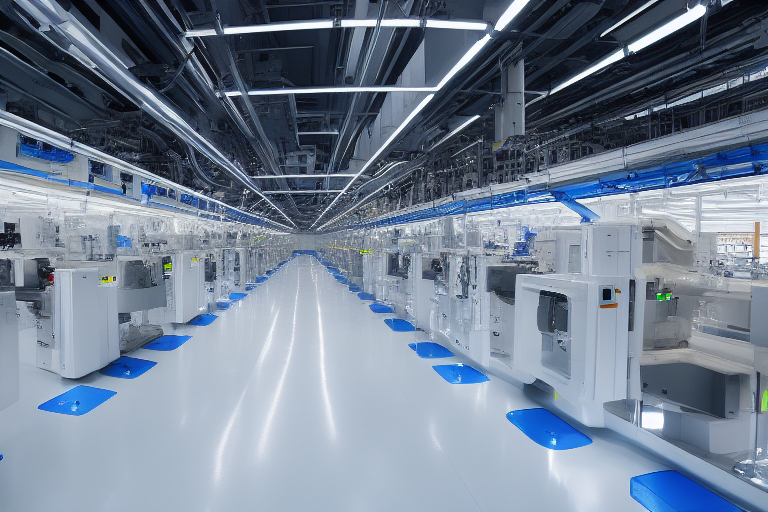
As the digital landscape shifts from centralized clouds to multi-tiered edge architectures, new frameworks are optimizing both processing speed and security. This evolution promises massive gains in latency and bandwidth but introduces a significant computational 'complexity premium.'
-
As global AI compute undergoes a staggering 1,000x expansion, a parallel revolution is bringing high-performance intelligence directly to mobile hardware. This technological divergence promises a future of both massive autonomous agents and intimate, privacy-preserving edge intelligence.
-

As major AI companies face increasing legal and physical security threats, a technical shift toward edge computing is moving intelligence from data centers to mobile devices. While this promises enhanced privacy, it also creates the potential for undetectable, localized surveillance.
-
A new era of multi-tier computing is replacing centralized clouds with an orchestrated ecosystem of edge, fog, and cloud layers. New methodologies in dynamic offloading are enabling massive scalability and energy efficiency across distributed networks.
-

The migration of high-performance AI from centralized data centers to local edge devices is redefining computing. Through innovations in distributed orchestration, quantum-enhanced diagnostics, and specialized hardware, the next generation of intelligent autonomy is arriving in the palm of our hands.
-
As computing power migrates from centralized data centers to edge devices, a dual transformation is occurring in both localized AI and cloud-based defense. This article explores how deep learning and real-time threat intelligence are reshaping the landscape of both mobile autonomy and cloud security.
-
The transition toward edge-native AI, highlighted by models running locally on mobile hardware, is revolutionizing both consumer technology and industrial predictive maintenance. While breakthroughs in optimization and robust data processing promise unprecedented real-time intelligence, they also introduce critical challenges in post-quantum security and computational complexity.