If you’ve ever played Crimson Desert and felt that uncanny, bone-crunching sense of presence—that feeling where the world is so granularly alive it’s almost unsettling—you’ve already experienced the front lines of the Edge Revolution. We aren't just talking about better graphics; we're talking about a fundamental shift in how intelligence lives. We are moving away from the heavy, energy-hungry monoliths of massive data centers and pushing high-performance, multimodal intelligence directly into the palms of our hands.
This isn't just a gaming thing. The same logic driving 'catmaxxing' in a sandbox RPG is driving a 'precision revolution' in our physical infrastructure. We're seeing a move toward a Symbiotic Internet of Things (SIoT), where the 'edge' is becoming hyper-localized and surgical. Think about the latest 3.0 irrigation hardware: we've moved past the 'spray and pray' method of watering a lawn to 'water-printing'—narrow, controlled beams of moisture that treat a landscape like a high-resolution data stream. It's beautiful, efficient, and entirely autonomous.
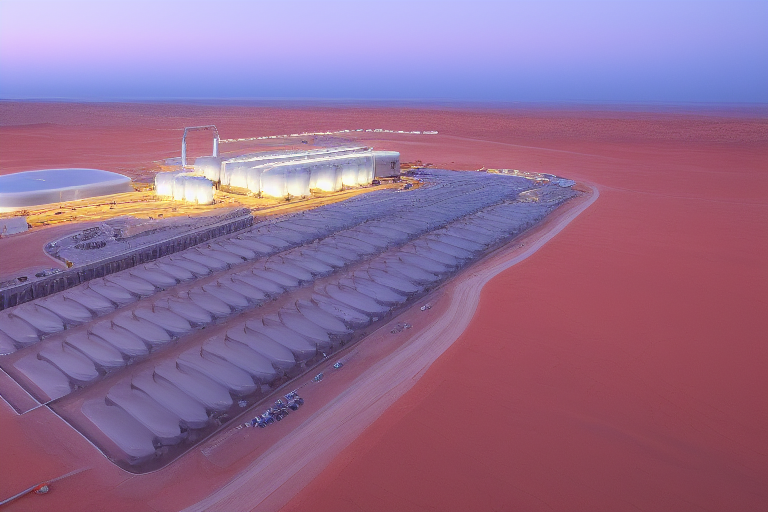
But here’s the friction: the 'complexity premium.' As we push for this level of granular control, the energy and infrastructure costs are starting to look a bit daft. On one end, we have massive desalination plants in the Middle East—monstrous, 2.4-gigawatt industrial giants—acting as lifelines for arid nations. They are scaling up at an insane rate, but the energy footprint is terrifying. We're looking at a potential 190 terawatt-hour spike in global electricity demand by 2035 just to keep the water flowing. We are building massive, energy-intensive systems to solve resource scarcity, which is a bit of a technological paradox, isn't it?
On the other end of the scale, the ocean is feeling the squeeze of unregulated expansion. In the South Pacific, the jumbo flying squid industry has exploded from a handful of vessels to over 500, mostly flying the Chinese flag, yet the actual catches are plummeting. It's a classic case of fishing pressure outpacing our scientific knowledge—a chaotic, unmanaged edge of the planet where the scale of human industry is simply outrunning our ability to track it.
And then, there's the security nightmare. When everything becomes 'intelligent' and 'localized,' everything becomes a target. We're seeing a terrifying expansion of the attack surface. It’s not just the high-profile stuff like the Uffizi Galleries in Florence dealing with breaches; it's the low-level, physical-layer chaos. The discovery of 'GDDRHammer' attacks shows that we can now use novel Rowhammer techniques to hijack CPU control via Nvidia GPUs. If we can breach high-end, $8,000 GPUs, no cloud environment is truly safe.
This brings us to a grim reality: the move to the edge requires a massive, invisible shield of post-quantum cryptography to protect the deluge of localized data we're about to generate. As geopolitical tensions rise—with threats looming over vital desalination infrastructure in the Gulf—the edge is no longer just a computing concept. It is the new frontline of global stability.
What The Community Said
The vibe in the community is a cocktail of pure excitement and genuine dread. On one side, you have the optimists celebrating the sheer magic of autonomous, high-fidelity ecosystems—the idea of a yard or a game world that 'just works' with surgical precision. But on the other side, the engineers are sweating. There is a massive, ongoing debate about the 'security tax.' People are rightly worried that the sheer computational overhead required for multi-layered privacy defenses and post-quantum security might actually cripple the very edge devices we're trying to empower. We want the intelligence, but can we afford the weight of the armor?