The Precision Revolution: Scaling Water Supply and Automating its Use
As global water scarcity intensifies due to shifting rainfall patterns and rising temperatures, a profound transformation is unfolding in how we secure and distribute our most precious resource. This shift is occurring simultaneously at two vastly different scales: the massive, industrial-scale desalination plants securing the survival of arid nations, and the hyper-localized, intelligent irrigation systems redefining the 'last mile' of water distribution.
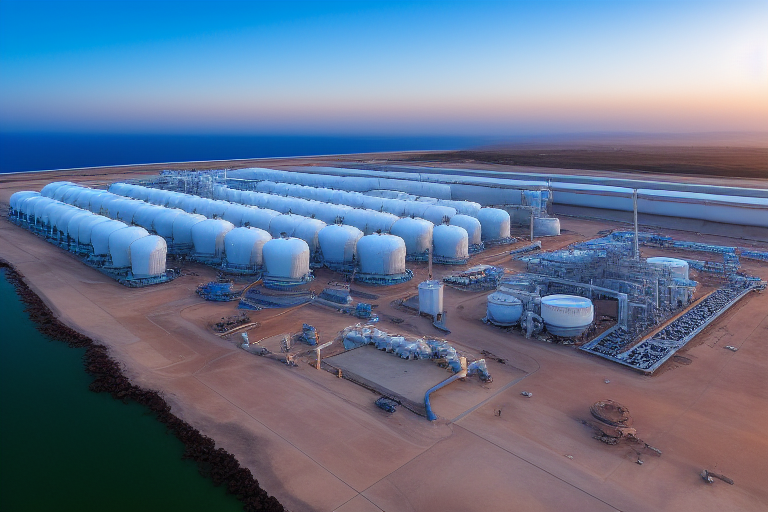
In the Middle East, where the absence of permanent rivers makes water security a matter of industrial might, the scale of infrastructure is expanding at an unprecedented rate. For countries like Qatar, desalination is not merely a supplement but a lifeline, producing 77% of all fresh water and 99% of all drinking water. The region, which hosts 27% of the world's desalination facilities, is seeing a trend toward unprecedented consolidation and scale. According to recent studies, the average size of a desalination plant has grown roughly tenfold over the last 15 years. Massive installations, such as the Ras Al-Khair plant in Saudi Arabia, can produce over one million cubic meters of fresh water daily—enough to sustain millions of people—driven by power capacities as high as 2.4 gigawatts.
However, this massive-scale supply comes with a significant energy footprint. As the industry moves toward larger, more efficient plants, the global demand for electricity is poised to spike. Projections suggest that the growth of desalination technology could add 190 terawatt-hours of electricity demand globally by 2035, an amount equivalent to the energy consumption of roughly 60 million households. This creates a complex technological paradox: we are building massive systems to solve water scarcity, yet the very energy required to run them adds pressure to the global climate crisis.
While desalination focuses on the macro-scale supply, a parallel revolution in 'localized intelligence' is tackling the micro-scale of water usage. The era of 'broad-cast' irrigation—simply spraying water over a wide area—is giving way to a paradigm of granular precision. New hardware, such as the latest 3.0 sprinkler heads, utilizes 'water-printing' technology to fire narrow, controlled beams of water that can rotate 360 degrees, ensuring precise placement and minimal waste. This approach mirrors the evolution of edge computing, moving away from energy-intensive, mass-application systems toward autonomous units that operate with surgical accuracy.
This transition is fundamentally an exercise in creating a Symbiotic Internet of Things (SIoT) for the landscape. By leveraging localized weather data and advanced pressure-sensing hardware, modern systems can perform a form of multi-scale semantic learning—understanding not just the general need for moisture, but the specific, real-time requirements of individual zones. Advanced features like self-cleaning 'burble' mechanisms and integrated smart drip systems allow the landscape to act as an autonomous micro-ecosystem, automatically adjusting watering runs based on ambient conditions.
Yet, both the massive desalination plants and these hyper-intelligent irrigation systems face a common hurdle: the friction of infrastructure. For large-scale desalination, the capital expenditure is staggering, with the Middle East expected to spend over $25 billion on facilities between 2024 and 2028. On the residential scale, the move toward high-fidelity automation requires significant physical upgrades, including complex plumbing, bespoke wiring, and underground installations that demand professional-grade expertise. For the end-user, the 'intelligence' of these systems can often be trapped behind a wall of technical difficulty, characterized by a heavy reliance on digital-only tutorials and complex firmware updates.
What The Community Said
Reaction to this rise in high-precision, localized automation has been a mix of technical excitement and a push for deeper, more accessible integration. Early adopters of the latest 3.0 hardware have reported that the autonomy and precision are revolutionary, particularly the ability to map a yard with extreme accuracy via mobile applications. However, there is a growing demand among users for more robust, easy-to-access APIs to simplify the creation of custom, privacy-compliant automation scripts. Furthermore, much like the push for deeper integration in mobile operating systems, there is a significant call for these intelligent irrigation systems to move beyond standalone apps and integrate more seamlessly with broader smart-home automation ecosystems, allowing for truly unified control of the symbiotic environment.