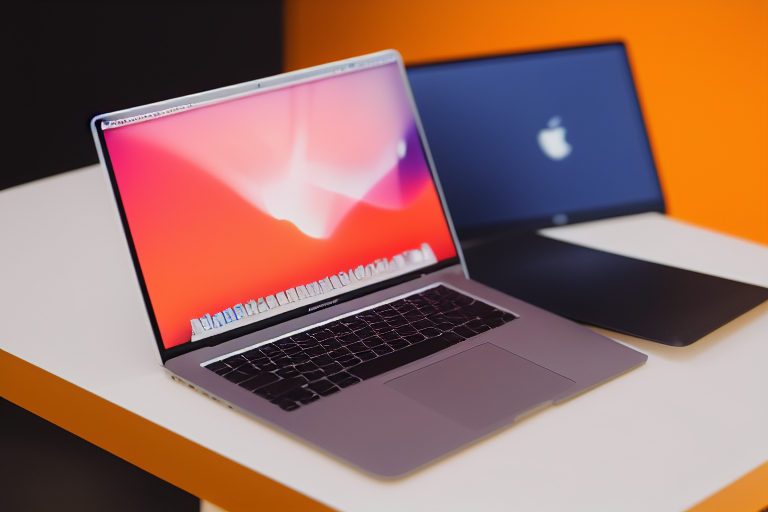
Beyond the Price Tag: Choosing Between MacBook Neo and Air in the Pro-AI Era
The $500 difference between the MacBook Neo and the MacBook Air is more than just a budgetary hurdle; it is a fundamental choice between two different visions of mobile computing. For the casual user—a student or a frequent traveler—the $599 MacBook Neo offers a playful, notch-less, and highly portable alternative to the traditional MacBook formula. With its vibrant color options like Citrus and Indigo and a chassis that feels lighter and more approachable, the Neo is an enticing proposition.
However, for anyone sitting in front of a screen for eight hours a day, the compromises of the Neo become impossible to ignore. While the Neo utilizes the capable A18 Pro chip—a processor that performs admirably between the M1 and M2 generations—it is tethered by a strict 8GB of memory. In an era where macOS is increasingly dominated by background AI tasks that can consume 6GB of RAM at idle, that 8GB ceiling is dangerously low. To use the Neo effectively, one must carefully manage every Chrome tab and background application to avoid the system grinding to a halt.
This tension between portability and raw power is the heartbeat of the current 'Edge Revolution.' We are witnessing a massive architectural shift where high-performance, multimodal intelligence is moving away from energy-hungry data centers and directly into the palms of our hands. This isn't limited to Apple; the entire landscape of 2-in-1 computing—from the Microsoft Surface Pro powered by Snapdragon X Elite to the iPad Pro with M4—is racing toward a localized, edge-native intelligence. The goal is no longer just document editing, but the ability to run sophisticated models, such as Google's Gemma 4, entirely in airplane mode.
Making this level of local intelligence a reality requires more than just raw transistor counts; it requires extreme computational efficiency. Breakthroughs like the CodecSight system are optimizing AI inference by leveraging existing video codec metadata, using techniques like patch pruning and selective KV cache refreshing to reduce GPU compute requirements by as much as 87%. Simultaneously, frameworks like InstAP are enabling Vision-Language Models to move beyond broad scene recognition to understanding the precise, spatial interactions between objects.
Yet, as our devices become more intelligent and more 'edge-native,' they also become more complex. This intelligence brings a duality of empowerment and risk. On one hand, edge computing is a victory for privacy, as sensitive data remains on the device. On a more granular level, the ability for AI to understand the precise dynamics of a room offers incredible utility. On the other, these same tools could facilitate a new era of localized, unobtrusive surveillance. Furthermore, as we implement multi-layered defenses like TADP-RME to protect against the looming threat of cryptographically relevant quantum computers (CRQCs), we face the 'complexity premium'—the risk that the very overhead required to secure our devices could eventually overwhelm them.
What The Community Said
Reaction across the engineering and enthusiast communities has been a study in tension. Many developers are celebrating the efficiency gains seen in recent mobile optimizations, noting that the speed and autonomy of local models are revolutionary for privacy-encentric applications. However, there is a growing debate regarding the 'complexity premium.' Some engineers express concern that the computational overhead required for multi-layered privacy defenses and post-quantum encryption could eventually cripple the very edge devices they are intended to secure. Furthermore, a divide exists between those favoring the flexible, managed runtimes of modern software and those advocating for a return to the efficient, edge-native, and unified design philosophy seen in earlier computing eras.
Ultimately, if you want a device that can serve as a reliable, long-term workstation, the M5 MacBook Air remains the gold standard. It is a decked-out computer that, with its superior trackpad, MagSafe charging, and robust memory, is built to endure the evolving demands of an AI-driven world.